風冷已經不夠用
NVIDIA Vera Rubin NVL72 一櫃有 72 顆 GPU。頭份第一期以每櫃 188 kW(MaxQ)設計、227 kW(MaxP)校核。傳統風冷機房每櫃多在數十 kW 以內,要用空氣帶走 200 kW 的熱量,風量與噪音都不切實際。因此 Vera Rubin 採用晶片冷板直接液冷,熱量絕大部分直接進入冷卻液。
水溫越高,越容易「免費」排熱
排熱的難易,取決於冷卻水和外氣的溫差。傳統冰水系統供水約 7–18 °C,外氣常常比水還熱,只能靠冰水機用壓縮機把熱「抽」出去,耗電可觀。
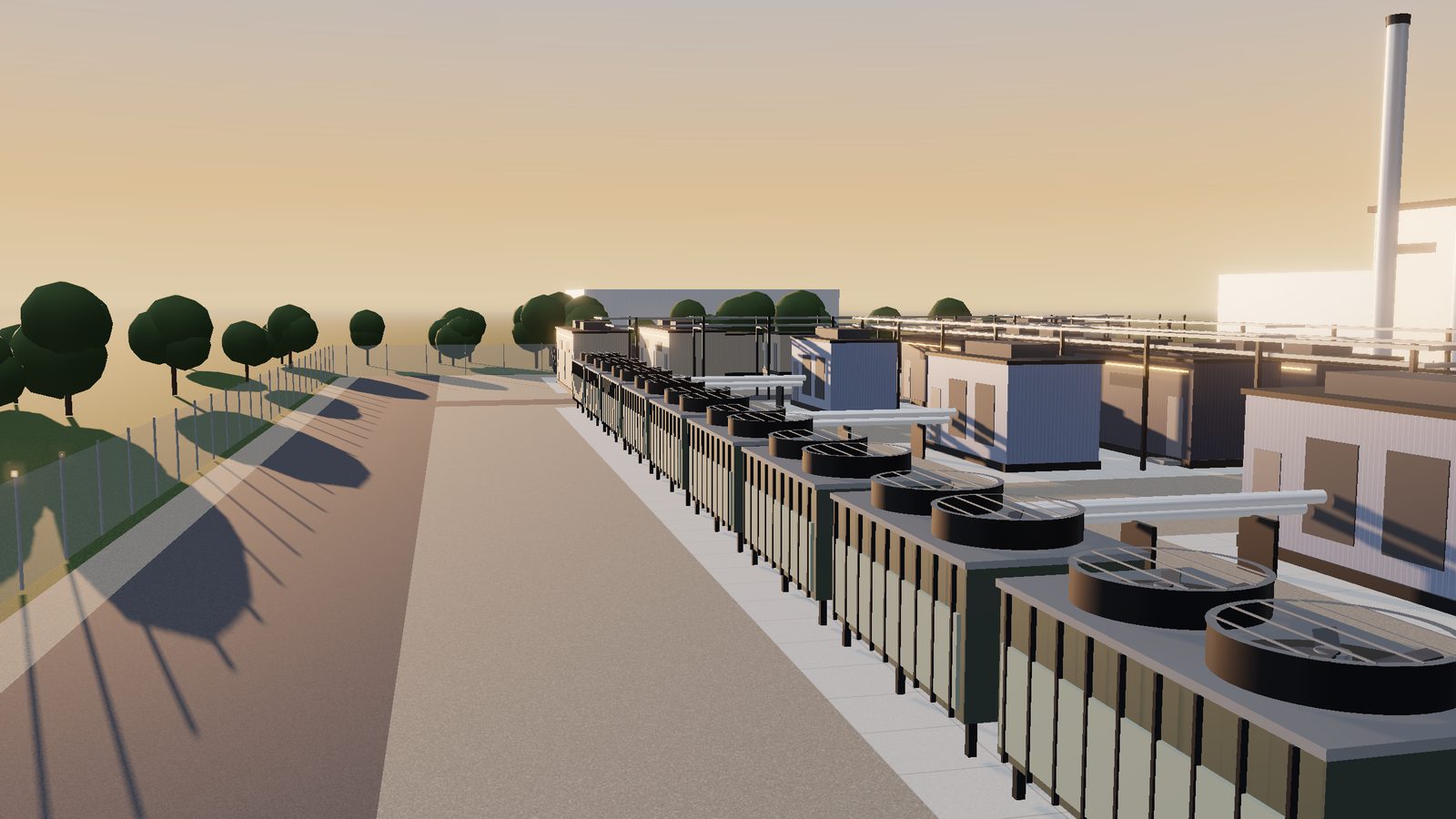
當供水溫度提高到 45 °C,外氣大多比冷卻水涼,乾冷器靠風扇就能把熱散到空氣中。台灣夏季午後的高溫時段,則由絕熱式預冷(在進風前加濕降溫)補上,冰水機不再是必要設備。
剩下的 8% 怎麼辦
網路設備、儲存與電源轉換仍會產生少量需要風冷的熱。IT 模組內配置列間空調,就近處理這部分,避免為了少數設備把整個機房做成低溫環境。
第二路熱沉:廠區冷卻水
頭份園區位在既有發電廠內。除了 8 + 1 台乾冷器,我們再以板式熱交換器接入廠區冷卻水,容量為 2 × 50%。當乾冷器需要維修,或遇到極端氣候時,仍有一條獨立的排熱路徑。
對客戶的意義
- 設計支援 MaxP:機櫃設計可依 MaxP 227 kW 運轉。
- 較低的電力成本:PUE 越低,同樣的 IT 負載需要的總電力越少。
- 更少的機械設備:沒有冰水機,代表更少的維護項目與故障點。
Air is no longer enough
An NVIDIA Vera Rubin NVL72 rack holds 72 GPUs. Miaoli Phase 1 is designed at 188 kW per rack (Max-Q) and verified at 227 kW (Max-P). Conventional air-cooled halls usually stay in the tens of kilowatts per rack; moving 200 kW of heat with air is impractical in airflow and noise. Vera Rubin therefore uses direct-to-chip cold plates, and nearly all of its heat goes straight into liquid.
The warmer the water, the easier the free cooling
How hard it is to reject heat depends on the gap between water and outdoor air. Classic chilled-water systems supply roughly 7–18 °C, so outdoor air is often warmer than the water and compressors must pump the heat out, at a real energy cost.
At a 45 °C supply, outdoor air is cooler than the water most of the time, so dry coolers can shed the heat with fans alone. For Taiwan's hottest summer afternoons, adiabatic pre-cooling of the intake air covers the gap, and chillers are no longer required.
What about the remaining 8%?
Network, storage and power conversion still produce some heat that goes to air. In-row coolers inside each IT module handle it locally, so the hall never has to be chilled for a few devices.
A second heat sink: plant cooling water
The Miaoli campus sits inside an operating power plant. Beyond the 8 + 1 dry coolers, plate heat exchangers connect to the plant's cooling water at 2 × 50% capacity, giving an independent heat path during maintenance or extreme weather.
What it means for customers
- Designed for Max-P: racks are designed to run at Max-P 227 kW.
- Lower energy cost: a lower PUE means less total power for the same IT load.
- Less machinery: no chillers means fewer maintenance items and failure points.
熱量從晶片冷板一路以液體帶到乾冷器,中間不經過冰水機。Heat travels in liquid from the cold plates to the dry coolers without passing through a chiller.
需要完整規格?Need the full specification?
下載頭份第一期規格書,或直接與工程團隊討論您的部署。Download the Miaoli Phase 1 spec sheet, or talk to our engineers about your deployment.